LAMOR&CO · Journal
Should Your Engagement Ring and Wedding Band Sit Flush? A Diamond Setter Explains
Published September 13, 2026
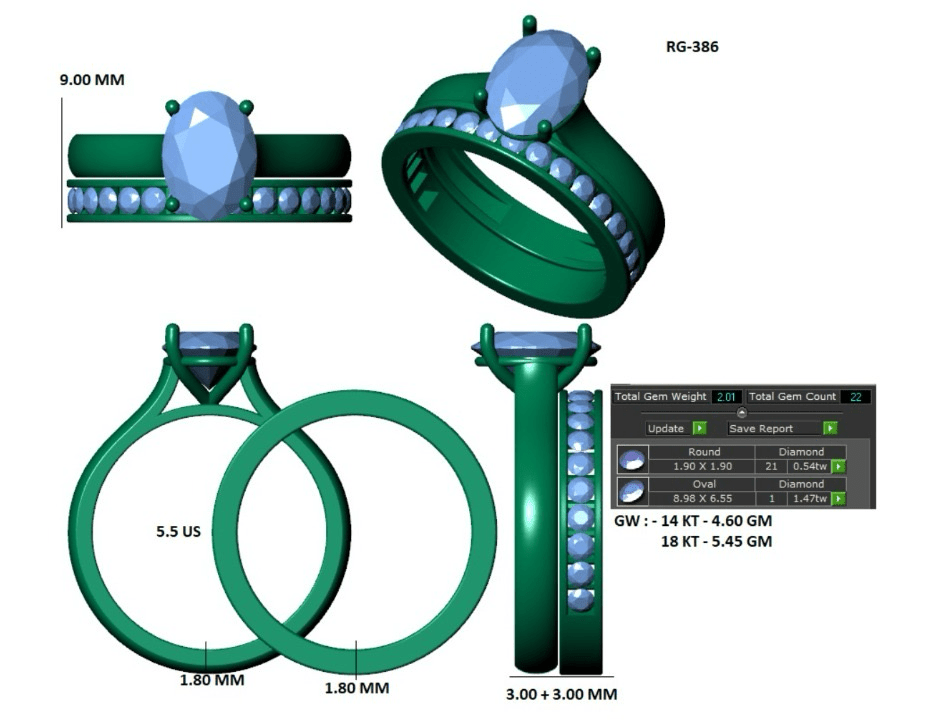
When couples choose an engagement ring, the wedding band often feels like a decision for later. At the bench, I see the two rings differently.
If they will be worn together every day, they should be considered together from the beginning.
After 27 years working as a diamond setter, I have seen beautiful engagement rings that pair naturally with a straight wedding band — and others where the architecture of the engagement ring makes a small gap unavoidable. Neither is automatically wrong. What matters is understanding why the rings sit the way they do, and whether that result works for the person who will wear them.
What does “flush fit” actually mean?
A flush fit simply means the wedding band can sit directly beside the engagement ring without a visible gap between them.
Many couples prefer that continuous look. But a flush fit is not a universal sign of better craftsmanship. Some engagement-ring designs naturally allow it; others do not.
The shape and position of the center-stone setting, the gallery underneath the diamond, the basket, prongs, and the height of the head can all affect how close another ring can sit.
The center-stone setting can determine the wedding band
One of the first things I look at is the structure underneath the center diamond.
If the basket or gallery extends outward close to the finger, a straight wedding band may touch that structure before it can sit beside the engagement-ring shank. The result is a gap.
That gap may be intentional and attractive. But if the wearer expected the two rings to sit perfectly together, it can become an unpleasant surprise after the engagement ring has already been purchased.
This is why I prefer to think about the wedding band before the engagement-ring design is completely finalized whenever possible.
Higher is not automatically better
Raising the center diamond can sometimes create more space for a wedding band. But simply making a setting higher is not a solution I would use without considering the rest of the ring.
A higher center stone can become more exposed to impact and may catch more easily on clothing or hair. A lower setting can feel more integrated and comfortable, but it still needs enough clearance for the diamond and enough structure to hold it securely.
The correct height is a balance between beauty, security, proportion, comfort, and the way the wedding band will interact with the engagement ring.
A small gap is not necessarily a problem
There is a tendency to assume that two rings must touch perfectly all the way around. They do not.
Some designs look better with a small intentional space between them. In other cases, a curved or contoured wedding band can follow the engagement ring and create a closer visual fit.
The important distinction is between an intentional design choice and a compatibility problem discovered too late.
If a gap is part of the design and the wearer likes it, there is nothing to correct.
When two rings touch, the contact matters
A perfectly flush appearance can create another issue that is easy to overlook: the rings may rub against each other every day.
Metal-to-metal contact can gradually wear surfaces over time. If pavé diamonds extend down the side of one or both rings, the relationship between the stones, prongs, and neighboring ring deserves particular attention.
Diamonds are extremely hard. That is one reason I do not want the exposed edge of a diamond or its setting repeatedly contacting a delicate area of the ring beside it.
Two rings can look beautiful together on day one and still need to be evaluated for how they will wear together over many years.
Straight band or curved band?
A straight wedding band is simple and versatile, and it pairs beautifully with many engagement rings. But when the center setting blocks a straight band from approaching the shank, a curved or contoured band can be a better solution.
The curve should feel deliberate. It should follow the engagement ring naturally rather than look like a correction that was added afterward.
For some designs, a custom wedding band is the cleanest way to make the two rings work as one composition.
Comfort matters as much as the photograph
Couples naturally look at the rings from the top. I also think about the sides of the fingers.
A wedding band with diamonds all the way around can be beautiful, but the stones and settings between neighboring fingers may feel different from a plain metal surface. Two wide rings worn together can also feel very different from either ring worn alone.
That is why I recommend trying the engagement ring and wedding band together whenever possible — not only looking at them together.
Move your fingers. Close your hand. Notice the height, width, edges, and how the rings interact.
Think of the two rings as one design
An engagement ring and wedding band do not have to match perfectly. They do not even have to use the same style.
But if they will be worn together, they should have a relationship.
I look at the proportions of both rings, how their lines meet, how much metal is visible, where the diamonds begin and end, and whether one ring visually overwhelms the other.
The goal is not simply to place two beautiful rings next to each other. It is to make sure they still look intentional when they become a pair.
What I would check before choosing the wedding band
Before making the final decision, I would check whether the band can sit at the distance you want, whether any part of the center setting blocks it, whether the rings rub in a potentially damaging way, whether the combined width feels comfortable, and whether the proportions look balanced on the hand.
These are small details, but engagement rings and wedding bands are not usually worn together for a few photographs. They may be worn together for decades.
Beauty gets your attention. Good design is what allows the rings to live together.
After 27 years at the bench, that is one of the things I believe couples should consider before the wedding band becomes an afterthought.
See how these bench standards are applied in our engagement ring craftsmanship process, or explore our engagement rings.
About the author
Mr. Mello is a Master Diamond Setter with 27 years of hands-on bench experience in fine jewelry and diamond setting. He spent most of his career in New York working through jewelry contractors on high-end pieces, including work produced for houses such as Tiffany & Co. and Harry Winston. Now based in Florida, Mr. Mello founded LAMOR&CO, bringing traditional bench craftsmanship to certified lab-grown diamond engagement rings.
If you are comparing band styles for daily wear, see our full eternity vs. half eternity guide, browse our lab-grown diamond wedding bands, or request a custom ring design with your preferred wedding-band fit in mind.
Choosing a ring should feel personal and clear. Explore the details, then speak with the atelier when you want a second set of eyes.
Request a custom quote →